
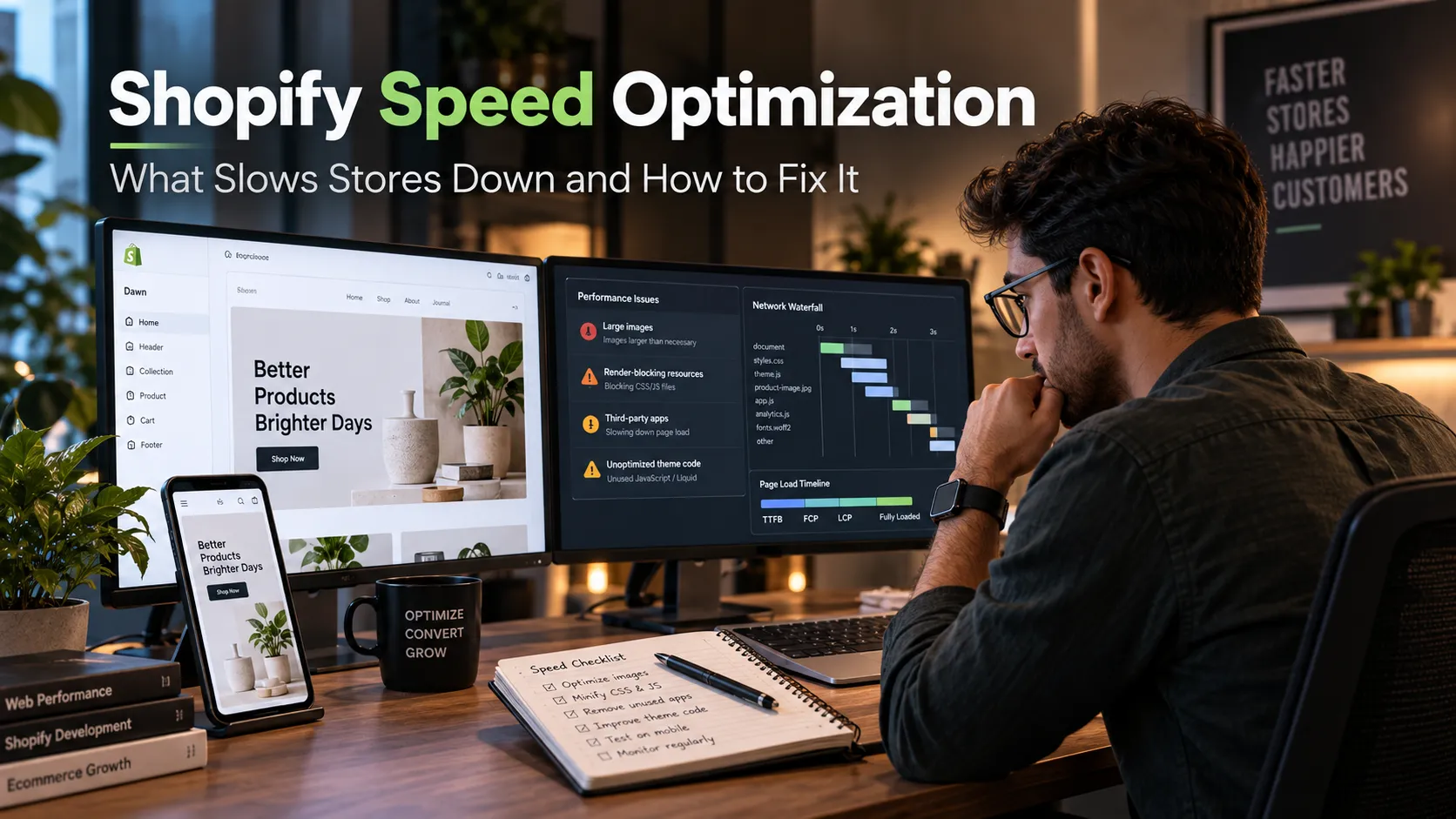
A practical guide to Shopify performance problems caused by apps, themes, images, third-party scripts and oversized storefront features. The important part is not adding another tactic to the stack; it is building a system that is clear enough to implement, measure and improve.
Practical principle: Audit installed apps and remove unused ones because some continue loading scripts even after their visible feature is no longer important.
What matters most
Audit installed apps and remove unused ones because some continue loading scripts even after their visible feature is no longer important.
Compress and correctly size product, collection and hero images instead of serving oversized assets to mobile devices.
Review third-party marketing scripts, chat tools, heatmaps and widgets because each can add network and JavaScript cost.
Keep theme sections focused and avoid stacking multiple sliders, autoplay videos and animation libraries on high-traffic templates.
Measure real product and collection pages, not only a lightweight homepage.
A practical implementation approach
Begin with the current customer journey and the business outcome you want to improve. Document the present baseline, choose the smallest set of changes that can influence it, and assign clear ownership. For e-commerce work, this prevents the project from turning into a collection of disconnected tasks.
Implementation should happen in a controlled sequence. Fix foundational issues first, then expand only after you can see whether the change improved performance. This makes it easier to separate genuine progress from normal week-to-week variation.
Common mistakes to avoid
How to measure whether it is working
Monitor Core Web Vitals, mobile conversion rate, bounce behaviour, checkout starts and revenue per visitor.
Choose a small number of metrics that connect directly to the business result. Reporting should make the next decision easier, not simply produce more charts.
Frequently asked questions
How should a business start with shopify speed optimization?
Start with one clearly defined business objective, document the current baseline, implement the smallest useful change and measure the result before expanding the scope.
How often should the approach be reviewed?
Review it whenever the website, customer journey, platform or business model changes materially, and use real performance data rather than relying on the original setup indefinitely.
Monk Media One approaches e-commerce projects around measurable business outcomes, practical implementation and systems that teams can continue using after launch.
Turn the strategy into a measurable system.
Start with the highest-impact opportunity, implement it properly and measure what changes.
Explore E-commerce Growth