
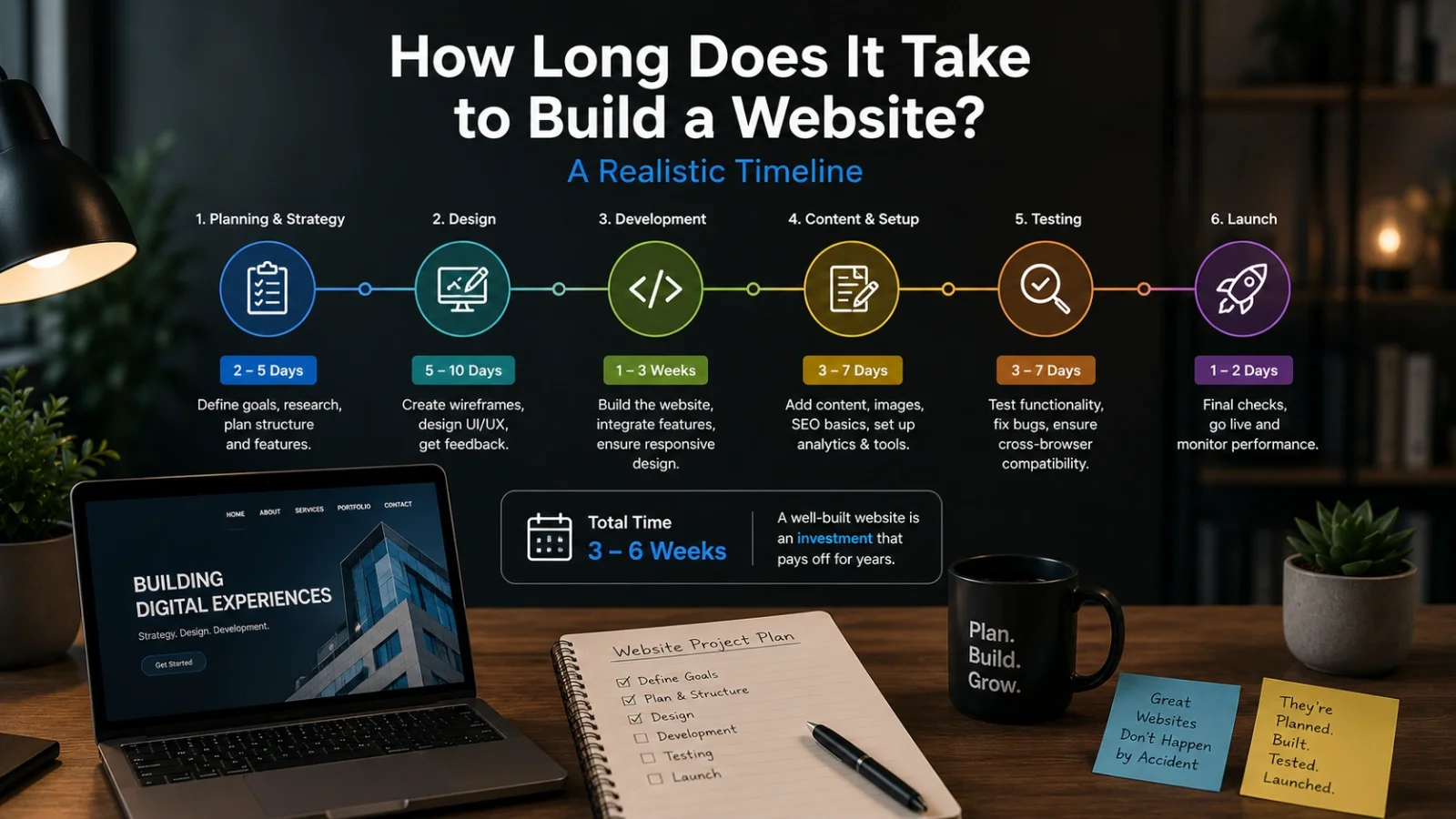
Two businesses begin similar website projects with the same target deadline.
One provides approved content, images and brand assets immediately and responds to feedback within 24 hours.
The other takes two weeks to supply content and another week to approve the first design.
The second project does not become slower because the development team suddenly works differently. It spends more time waiting.
Website timelines depend as much on scope, content and approvals as they do on development speed.
Typical website development timelines
| Website type | Typical timeline | Common scope |
|---|---|---|
| Brochure website | 2–4 weeks | 5–10 pages, service information, contact forms and basic customisation |
| Custom business website | 4–6 weeks | Original layouts, custom design, richer content and more revision stages |
| E-commerce website | 6–10 weeks | Products, payments, shipping, checkout, customer accounts and integrations |
| Custom web application | 10+ weeks | Dashboards, portals, booking systems, marketplaces and custom functionality |
What usually delays website projects?
Missing content
Pages cannot be completed when approved copy, images, pricing or product information are still unavailable.
Scope changes
New pages and features affect navigation, design, development, mobile layouts and testing.
Slow approvals
Several days of waiting after each review stage can add weeks to the final timeline.
Third-party integrations
Payment gateways, APIs and external platforms can introduce dependencies outside the development team's control.
How to keep the project on schedule
Prepare content before kickoff. Have approved copy, brand files, photography, pricing, legal information and contact details ready.
Freeze the first-phase scope. Separate essential launch features from ideas that can safely move into phase two.
Respond quickly to reviews. Aim for 24–48 hour feedback windows where possible.
Fast approvals can shorten a project more effectively than simply asking the development team to work faster.
Can paying more make the website faster?
Sometimes.
Additional budget can support parallel design and development, more resources, faster content production or priority scheduling.
However, research, approvals and testing still require time. Compressing every stage too aggressively increases the risk of mistakes and later rework.
Should you launch an MVP first?
Often, yes.
A strong first version can launch with the essential pages, clear messaging, working forms, mobile responsiveness, analytics and SEO foundations.
Advanced functionality can then be added in later phases.
For many businesses, launching a focused version sooner is more valuable than delaying the entire website until every future idea has been included.
Frequently asked questions
Can a website be built in one week?
A very simple site can be, provided scope and content are already prepared. Custom design and e-commerce projects normally require more time.
What should be ready before development starts?
Approved copy, logo files, brand guidelines, images, pricing, contact details and clear feature requirements should ideally be prepared beforehand.
Why do e-commerce websites take longer?
Payments, products, shipping, inventory, checkout and account workflows create additional setup and testing requirements.
Monk Media One plans website projects around realistic milestones, dependencies and testing requirements so timelines are clear before development begins.
Plan the timeline before the website enters development.
Define the scope, content dependencies and approval process early.
Explore Website Development